Kim
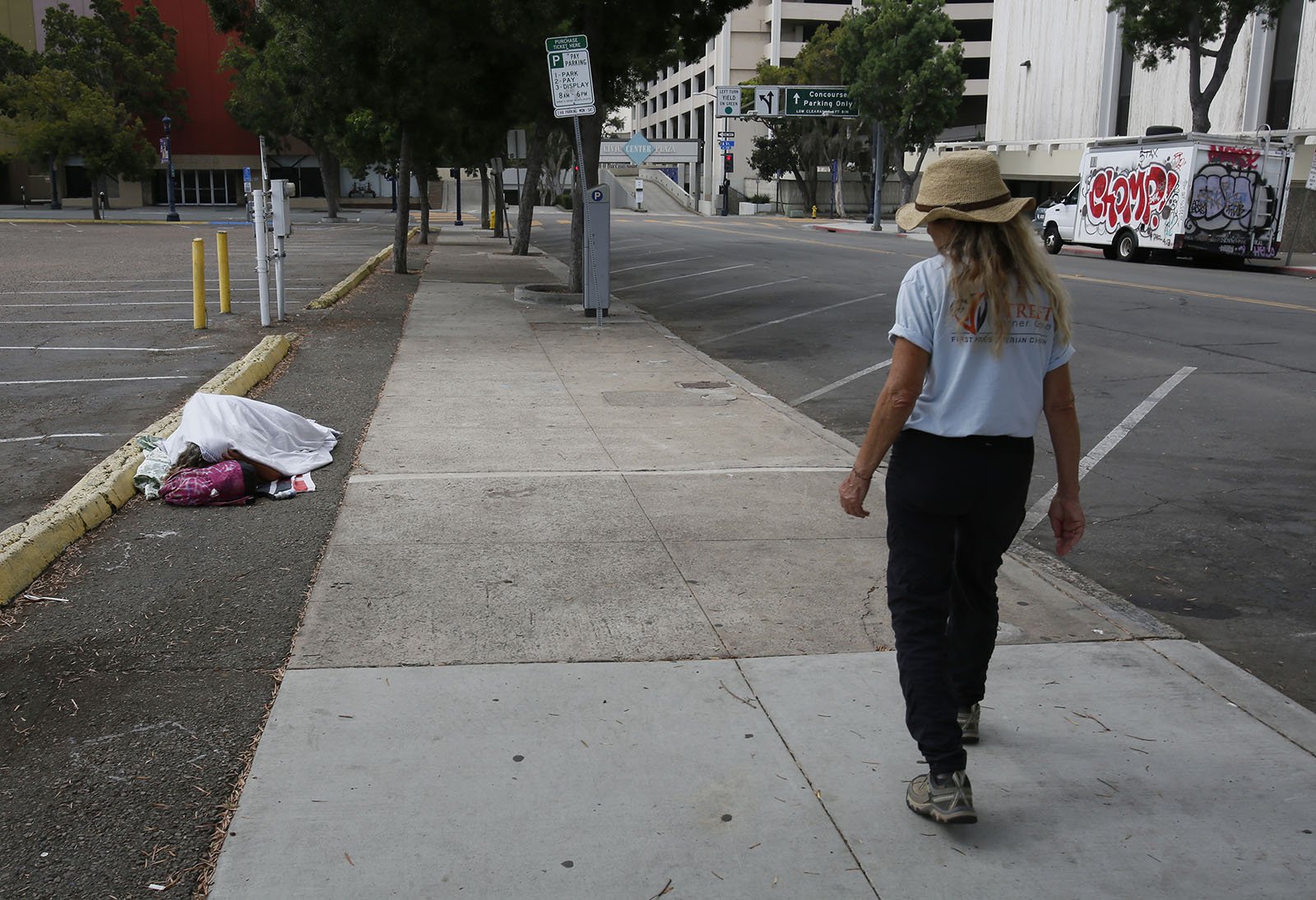
When our cadre of medical outreach volunteers first encountered Kim, she was a small bundle wrapped in a dirty white blanket on Third Avenue sidewalk just north of the seat of city government. When we said “Good Morning” and asked if she needed anything, she sprang upright, clad in a Hawaiian print sleeveless summer dress, and with a bright but sleepy smile launched into a prayer about being surrounded by angels.
Kim, 55, has lived in Washington D.C., San Diego, L.A., S.F., Redding, Reno, Las Vegas, Sun City, Barstow…and back again. “I need a home. Now, not four years from now,” she said. “I am viable, I can still work. Homelessness is a disability. I lost my respiratory therapist license because I cracked my head open on a dock doing back flips. I was an avid cyclist. I took a header. That’s when I started having narcolepsy. I couldn’t wake up.” That was in the 1990s. By her best estimate, she has been homeless for 15 years. Because of the traumatic brain injury (TBI) she started taking medications to deal with the constant headaches. However, Aderall was too expensive and didn’t work any more, so she uses meth, which is much more effective for managing all her issues, she said. “I’d get isolated. Smoking meth is a social network.”
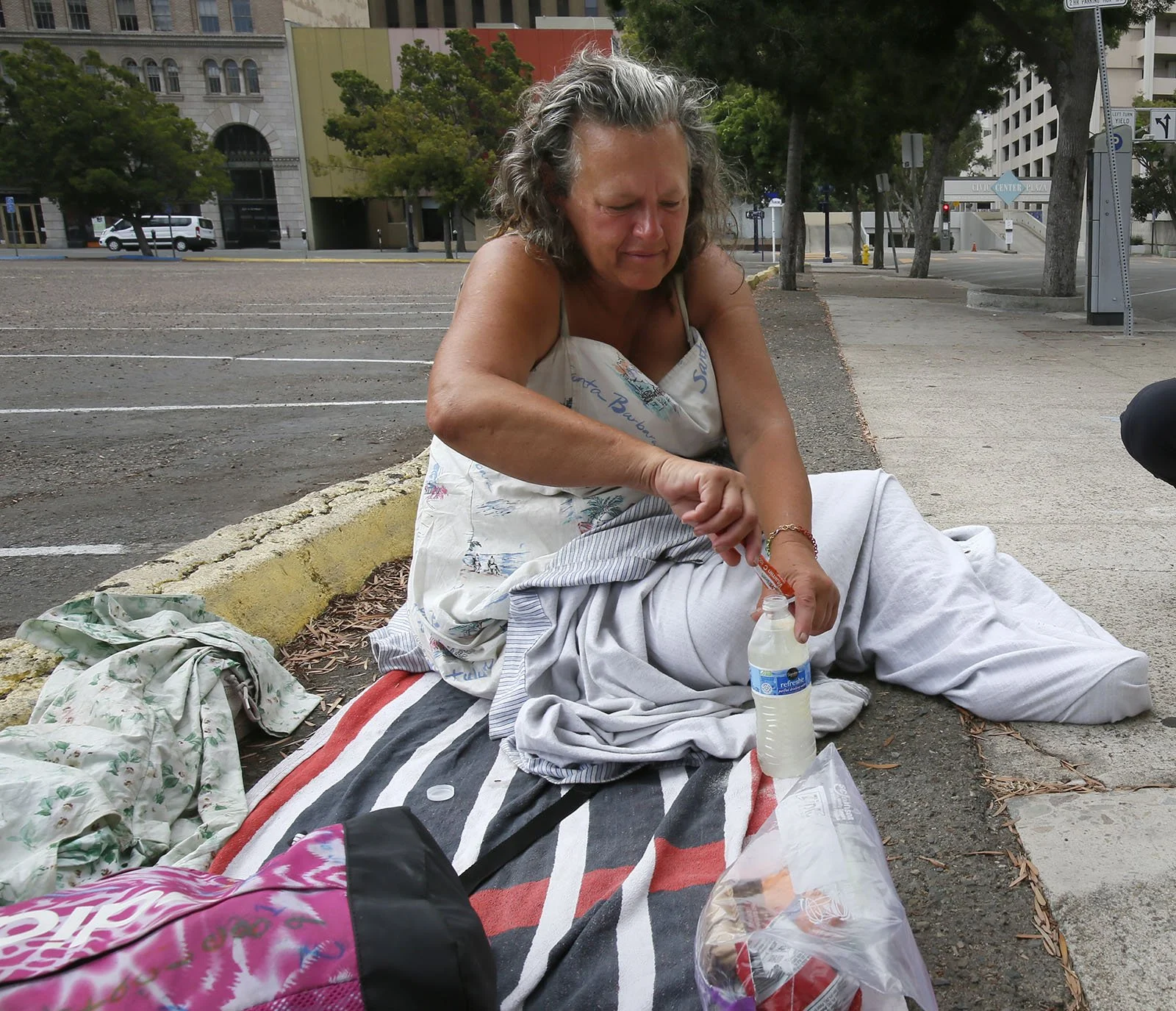
Homelessness is a sin, she kept saying - people should be working harder to help people off the street. Because of her narcolepsy, she can pass out while standing up and do a complete face plant, sleep for days and wake up having been robbed of all her possessions, and more than likely raped as well. “There’s no playing around. I can be standing next to someone talking, my eyes will lock on the ground and I’ll pass out. Invariably, someone will steal my backpack,” she said. Her wallet was stolen for the 13th time the previous week, with her i.d. and $100 cash. She had a debit card in her fanny pack, which someone used to buy MTS cards.
Kim tries to stay out of the public eye, meaning away from police sweeps and the unofficial homeless police, San Diego Clean and Safe officers. She currently stays with a group of friends in a parking lot near the Civic Center. She acknowledges that she uses the term ‘friends’ loosely. Thanks to one of those friends, she was able to sleep on cardboard the previous night. It kept her warmer than the tile floor. However that friend clearly wanted to share the cardboard with her, and she adamantly refused. Sometimes people stop and ask if she wants to stay on their couch, but she never accepts the offer because “it looks sketchy. I’m scared to get in people’s car. I won’t go to their home, I’m scared. I won’t go to tent city. There’s 200 people there. It’s easy for someone to be lurking.” She doesn’t have sex with anyone, she said. But she has been raped 41 times. “Some of it was terrible, I was in pain all night.” Even when she was struggling with sexual assault, “I had to keep it together.” She learned to laugh as a means of self-preservation. She started telling her assailants, “You’re so hard up you had to steal it?!”
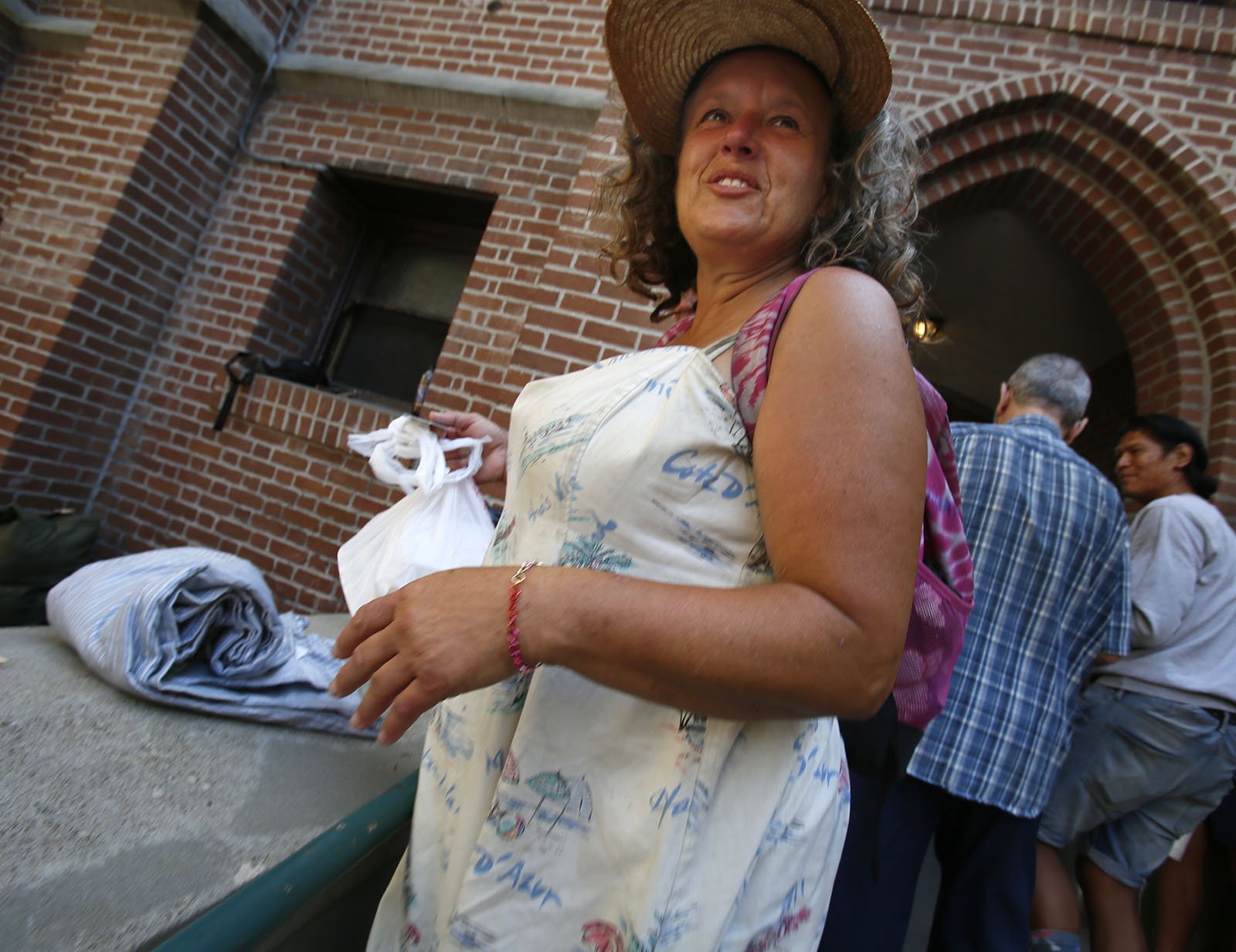
Trying to establish normalcy in her life is hard because when she gets settled into a seemingly safe place she gets kicked out (by police sweeps). There are abandoned buildings that she and others will stay in until the wrecking crews come to tear them down. She doesn’t like to do anything illegal. “If I’m hiding, it’s trespassing. I don’t do that. I use my meds in the open.” Kim has two dresses. She scrubs them clean until they fall apart. She also has a gym membership and “spends forever in there cleaning.” She wishes she could do a yoga class, but her shoes are filthy and she’s too embarrassed to put her shoes on a yoga mat. When she has the opportunity, she washes her hair by filling a cup with water and shampoo at the Embarcadero. After soaping and rinsing her hair, she waters a plant with the residual water. She uses body wipes most of the time, since showers are hard to come by for unhoused individuals.
Women have a difficult time making friends with other women, Kim noted. Some are fearful of everyone, others have PTSD and end up becoming prostitutes. Everyone take a different approach to life, she said, which leads to misunderstandings, grudges and hard feelings. When she meets a new woman on the street, Kim said, “You say to yourself ‘Dear God, help me make a friend out of this person.’ All we have is each other. But it can be damaging because they just hurt you and hurt you.”
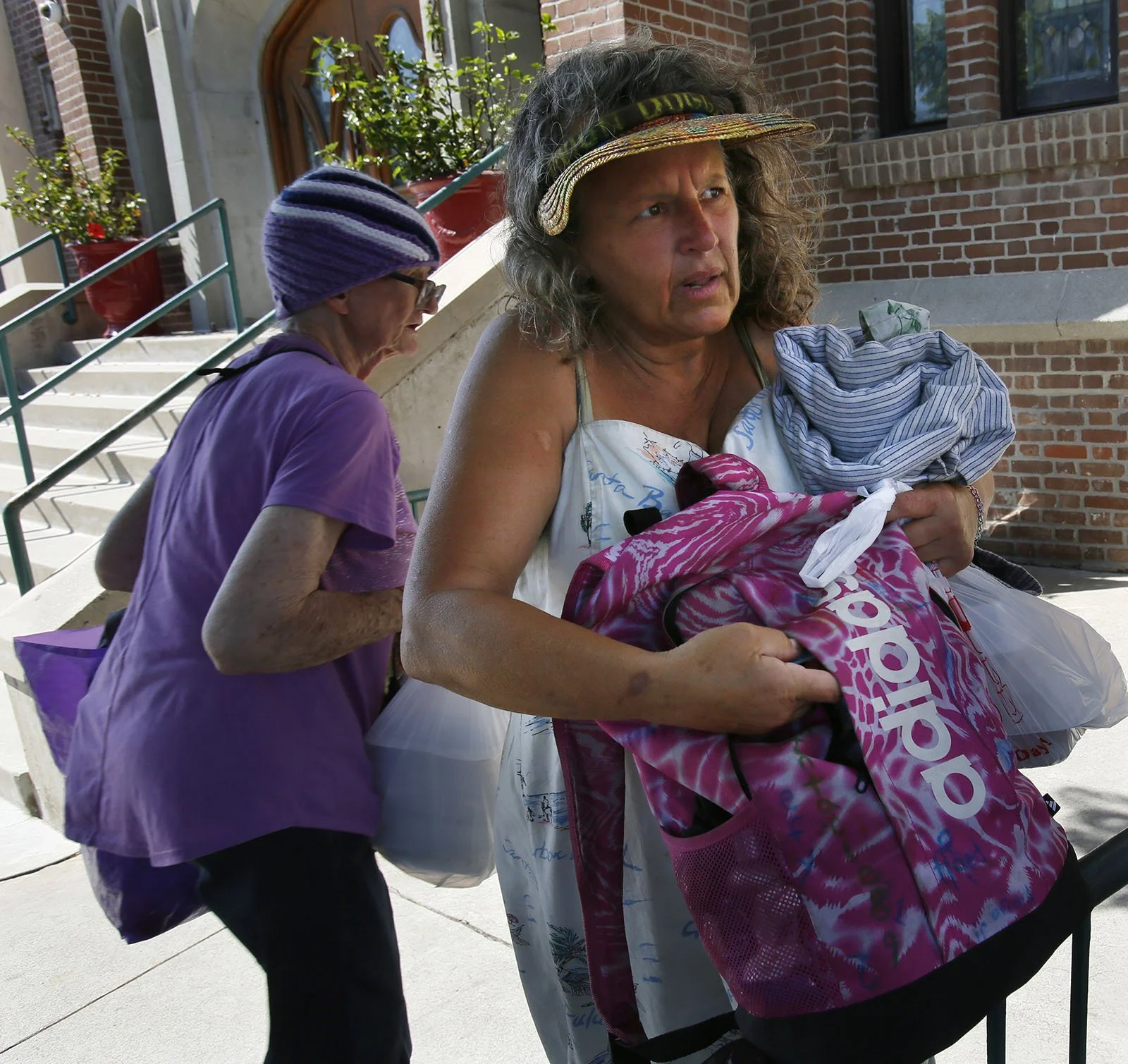
Her hips are starting to ache from years of sleeping on concrete, she admits. She’s been in the hospital 20 times when her meds don’t work, and has been through rehab as well. “The system is failing, not me. I’m trying!” she said.
I encountered Kim again at the First Presbyterian Church where the Ladle organization gives out food and clothing every Sunday. As we walked back onto the street, a loud drunk kept yelling at her that she was his woman, and didn’t he get her a sheet of cardboard to sleep on last night? He complained about the fact she wouldn’t have sex with anyone. He started poking her breast with his index finger. Stoic, unmoving, she was obviously annoyed and told him to stop. When he finally lumbered down the block Kim said “Maybe I’ll find another place to sleep tonight.” We walked to the corner, he followed, then peeled off because he clearly was uncomfortable in an area where everyone was Black. She said the Black community was more welcoming and protective of her than white people were. We moved up the street and he followed. We stood talking under a shade tree, next to a young couple curled up asleep against the church. Someone drove up in a car, parked next to us, gently woke the couple, and handed them food. Kim and I kept walking.
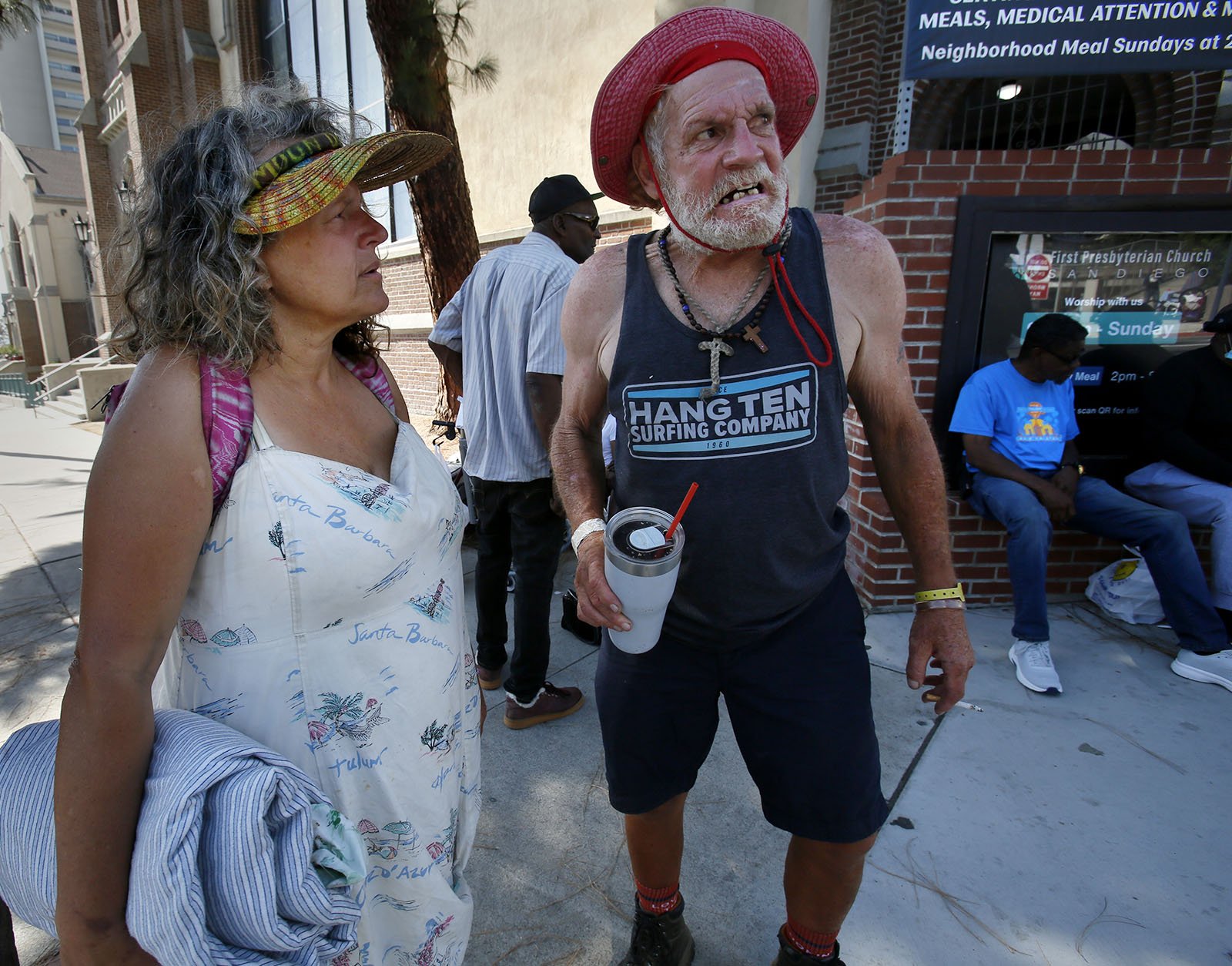
The next time I saw Kim was a few weeks later at a different church feed. She was on a bench behind me while I was talking with someone, but she appeared to be in her own world so I waited for the right moment to say hello. She got up and moved to an empty, shaded area of the patio, and curled up to nap on the concrete. She had no belongings. When the courtyard was nearly empty of people, she came and asked the person I was sitting with if he had any blankets. He gave her a blanket and pillow, which she took back to her spot in the shade. All her possessions were gone, she said, because she had been “kidnapped and robbed” by the police who picked her up in the middle of the night in a parking garage where she and some friends were sleeping. They handcuffed her, took her stuff, drove her to Las Colinas and locked her up overnight. She never got her belongings back, and she was angry. When she finished berating the police for locking up a harmless homeless woman, she relaxed enough to safely sleep on the church courtyard with her borrowed blanket.