Street Corner Care
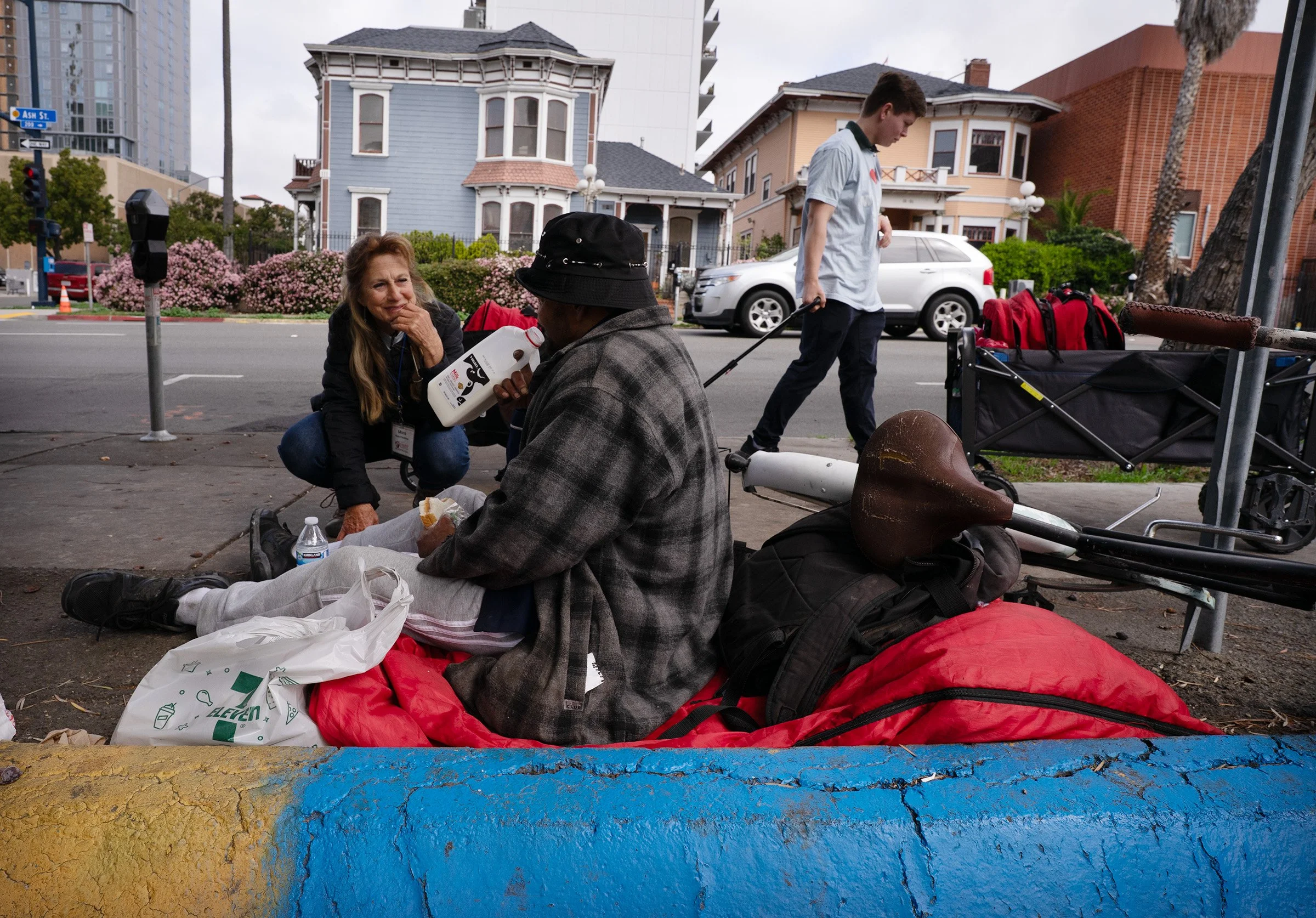
On a recent Saturday, a team of five healthcare providers with the Street Corner Care (SCC) outreach team pulled a cart overflowing with water, snacks, hygiene products and socks, on a meandering path towards the heart of America’s Finest City. They stop just shy of a single blanket piled up against a parking curb. Nurse practitioner Mona Breid approached the blanket and called out a cheerful “Good Morning” to the blanket. A middle aged woman with long grey-brown hair, wearing a white sundress decorated with images of palm trees and beaches, sprang up to a sitting position. Eyes sparkling, she launched into a prayer of thanks for the angels that were visiting her. When she was done with her prayer, she was then willing to hear Mona ask if she needed medical attention, hygiene products, food, or water. The woman accepted some snacks and a toothbrush, and promised to visit them the next day at the First Presbyterian Church (FPC) where the Ladle Fellowship offers a meal, clothing, and friendship every Sunday afternoon. The next day, volunteers from SCC recognized the woman, wearing the same dress and the same bright smile, and greeted her by name. Making connections and building trust is more important to the missions of both the Ladle Fellowship and the SCC than actually serving meals and giving away clothing, organization leaders said.
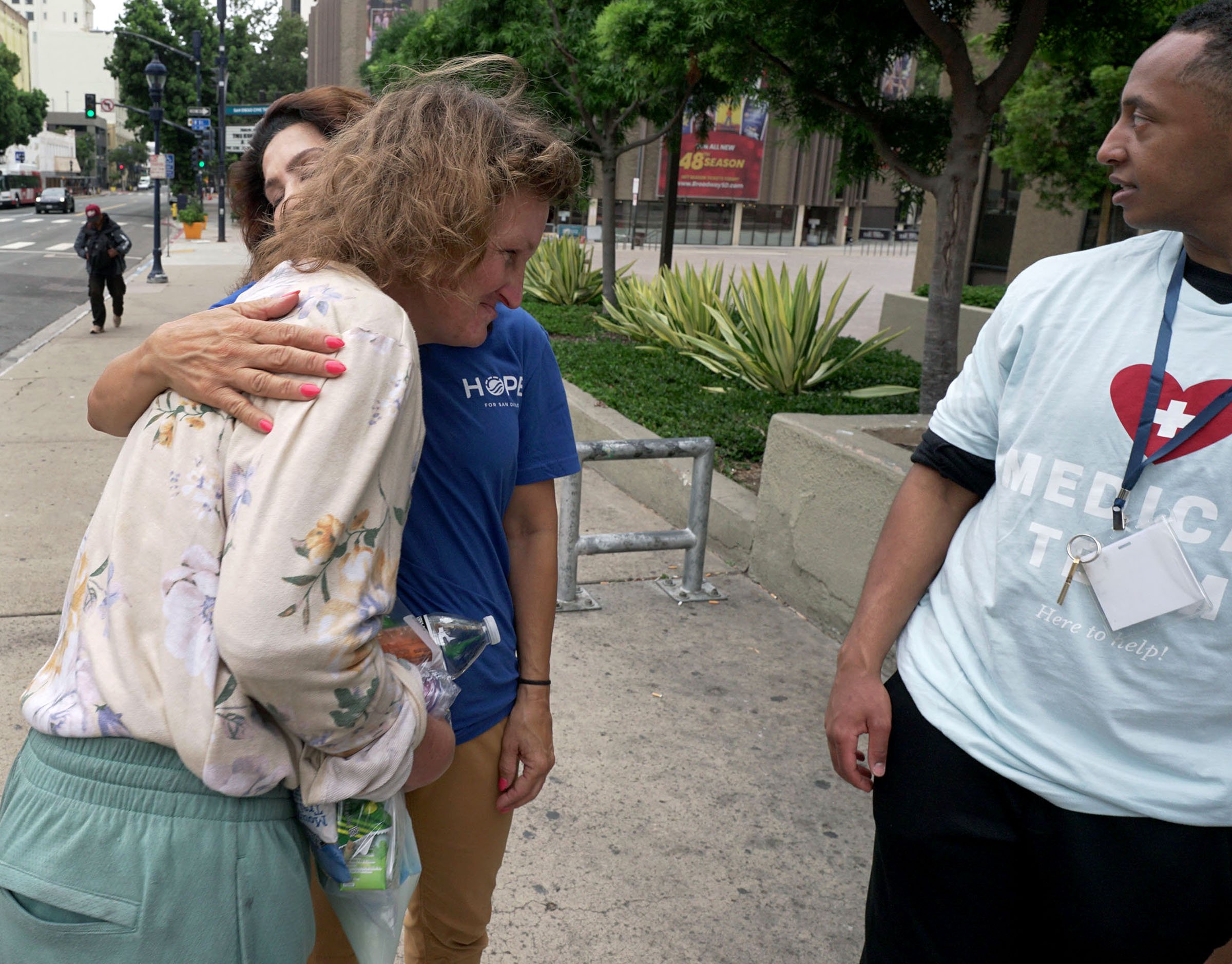
“This might be the only time this week that someone has shown genuine concern for their well-being,” Kaleb Tesfai tells the healthcare volunteers each Sunday before the doors open to guests at the FPC. “This might be the only time someone has listened to their story or even asked their name,” he added. Kaleb has co-directed SCC with Mona for the last two years. The UCSD graduate will be attending medical school next fall.
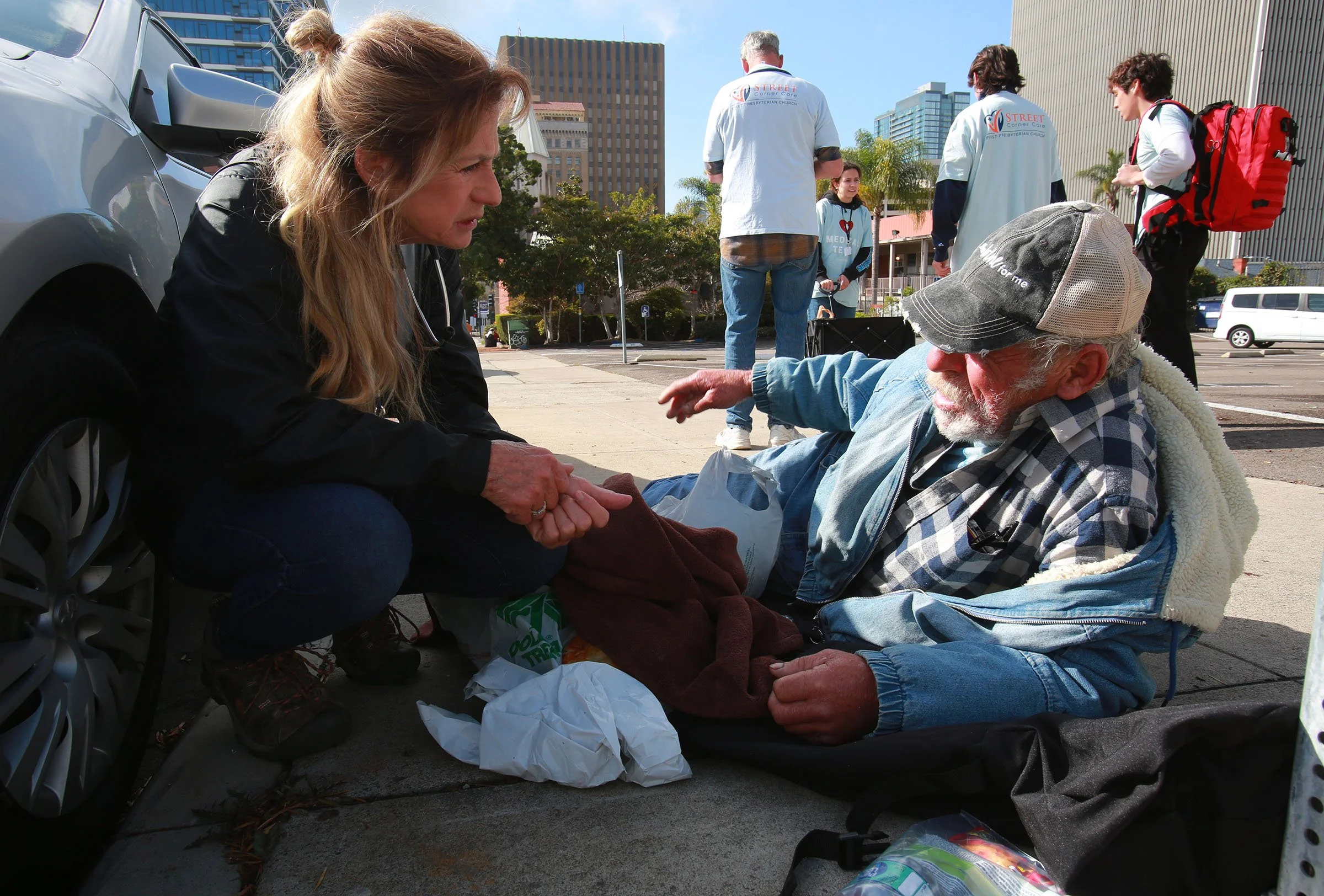
Mona has been a part of SCC since its inception in 2017 as a response to the deadly hepatitis A outbreak in San Diego. Originally operating out of a closet in a community room at FPC, the team of healthcare volunteers - both practicing providers and students from local universities - has been steadily growing. This increased ratio of caregiver to clients means those clients receive more quality time, according to Paul DeStefano, an SDSU student training to be a Physician Assistant and one of the SCC leaders. At SCC and Ladle, the students have the opportunity to learn the “art of medicine,” he added. Basic diagnostics can be learned from books, Paul said, but actual “didactic knowledge comes from applying the skills learned in the classroom to the real world.”
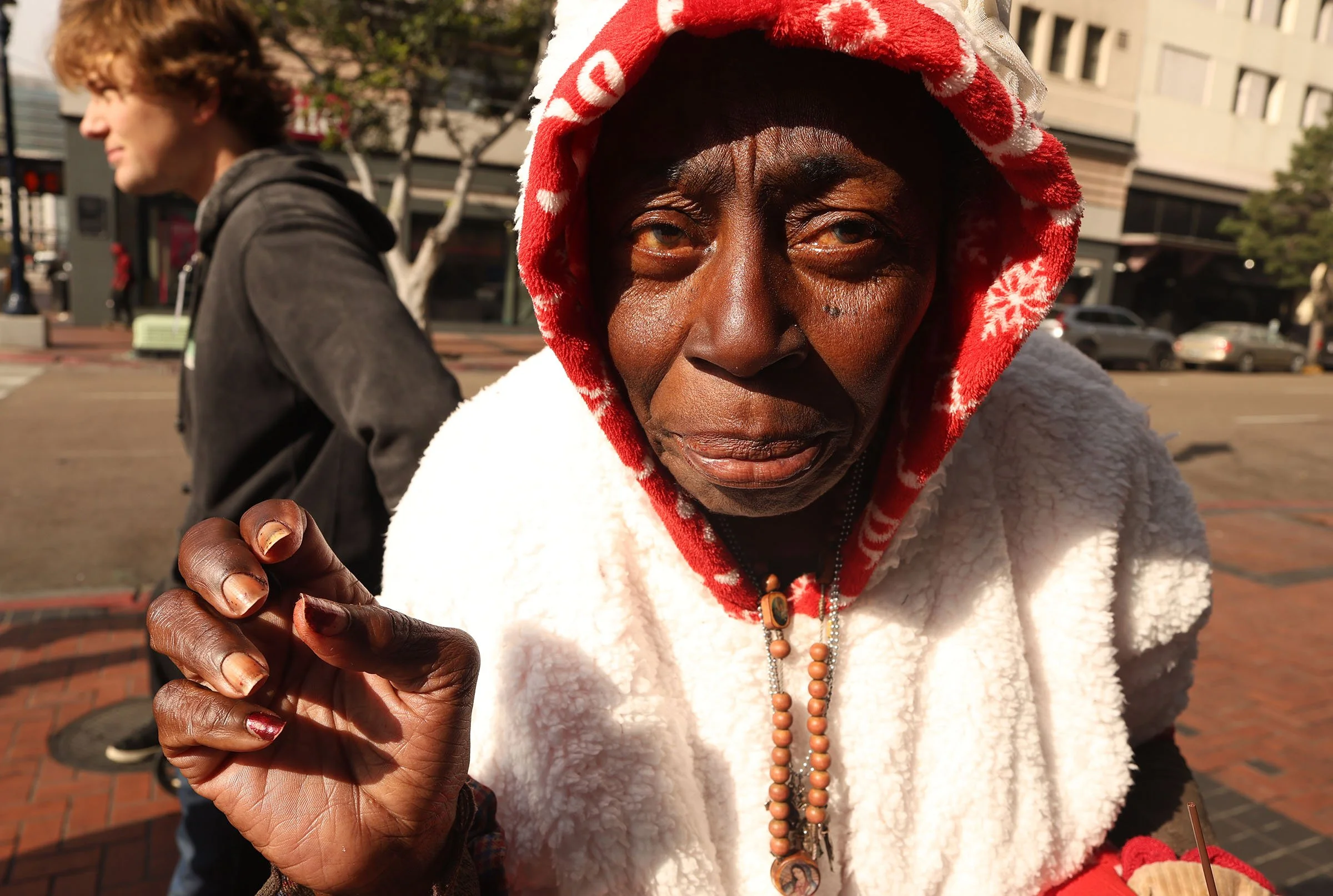
Walking back to the church after another eventful Saturday outreach session, Nate Linstrom, a recent graduate of UCSD and a regular volunteer, concurred with Paul’s assessment. Both the weekly Sunday healthcare tent operation at Ladle and the monthly outreach sessions build community and develop relationships that are powerful factors when someone on the street needs care but doesn’t trust the medical system. “We’re triage,” Nate said. “Our job is to figure it out - where to send someone for the best care. Having licensed practitioners is key.” He said it’s also an invaluable learning experience for medical students. “You learn how to communicate with patients that are going through something you haven’t experienced before. You learn how to make the conversation smoother so people trust you sooner. That is crucial because when you meet someone for the first time you only have a few minutes to create that trust while they decide whether to come back again or not.” He used the example of the gift of socks. He said many other groups providing assistance on the street will offer people socks, but require that the client get treated or have their vitals taken, or answer a series of questions, before giving them the socks. Nate has learned that the better approach is “socks before vitals. You can have a conversation about how cold it gets at night, how often they have the chance to wash their feet, etc.,” he said, “then ease into asking if they want their blood sugar tested. If you withhold those socks until you do your tests, they won’t come back.”
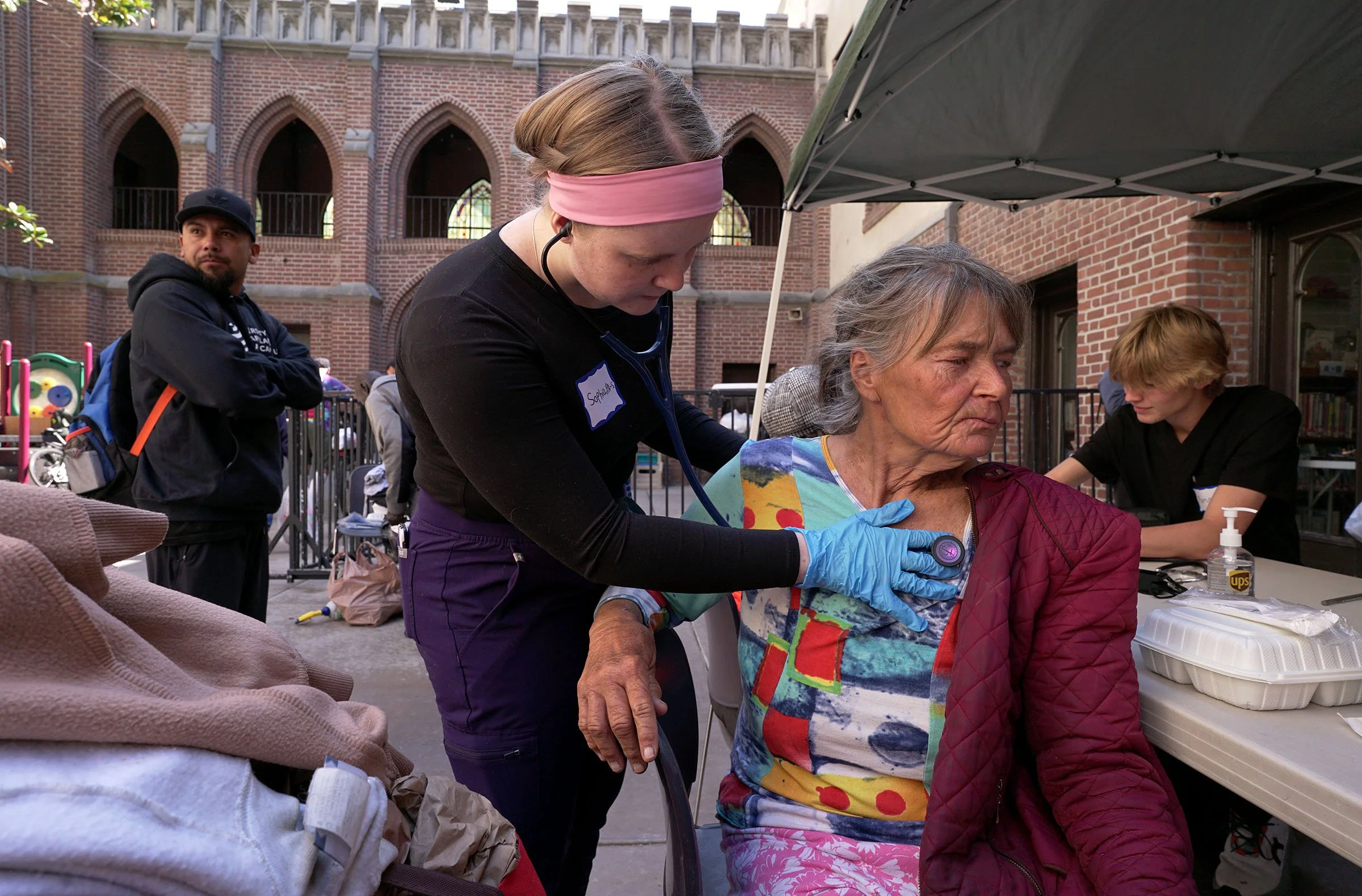
On any given Saturday, the team pulling the wagons can encounter completely different individuals and small communities nestled into overhangs, along the trolley line, or on a street corner under the shade of a tree. At a bus stop, an older woman in multiple layers of clothing was casually eating a hot breakfast of sweet potatoes, pancakes, eggs and a biscuit from a styrofoam restaurant container. After chatting with volunteers, she finally reveals she had fallen a few times and has recurring nose bleeds.
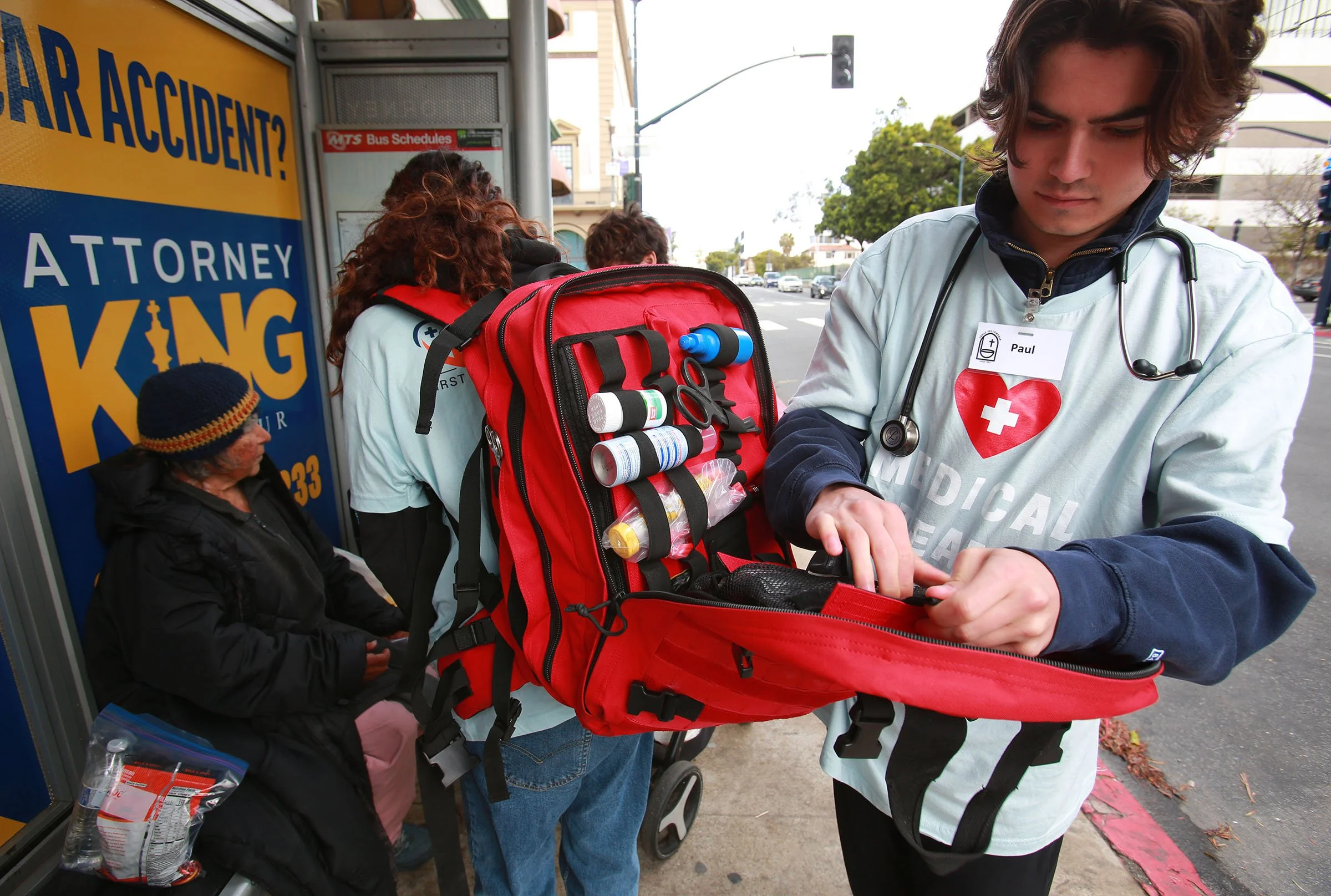
The two volunteers wearing the specialized medical backpacks unzip the inner compartments full of everything a provider might need to deal with open wounds, bug bites, headaches, back pain, high blood pressure, lice, and many other maladies. Meanwhile, just down the block, other team members were inspecting someone’s toothache with a small flashlight. Further down the street we encounter a group of men just waking up on the steps at the back side of Golden Hall in the Civic Center. We offer them snacks. One person wants information on how to join the Voices of Our City Choir, and the others accept water, but nothing else. As we were leaving, someone from behind a tarp yells “Hey is that Peggy?” So I doubled back to find an old friend named Snake huddled over one of his alcohol and air fires, cooking an omelet. We invited them all to Ladle for a Sunday meal.
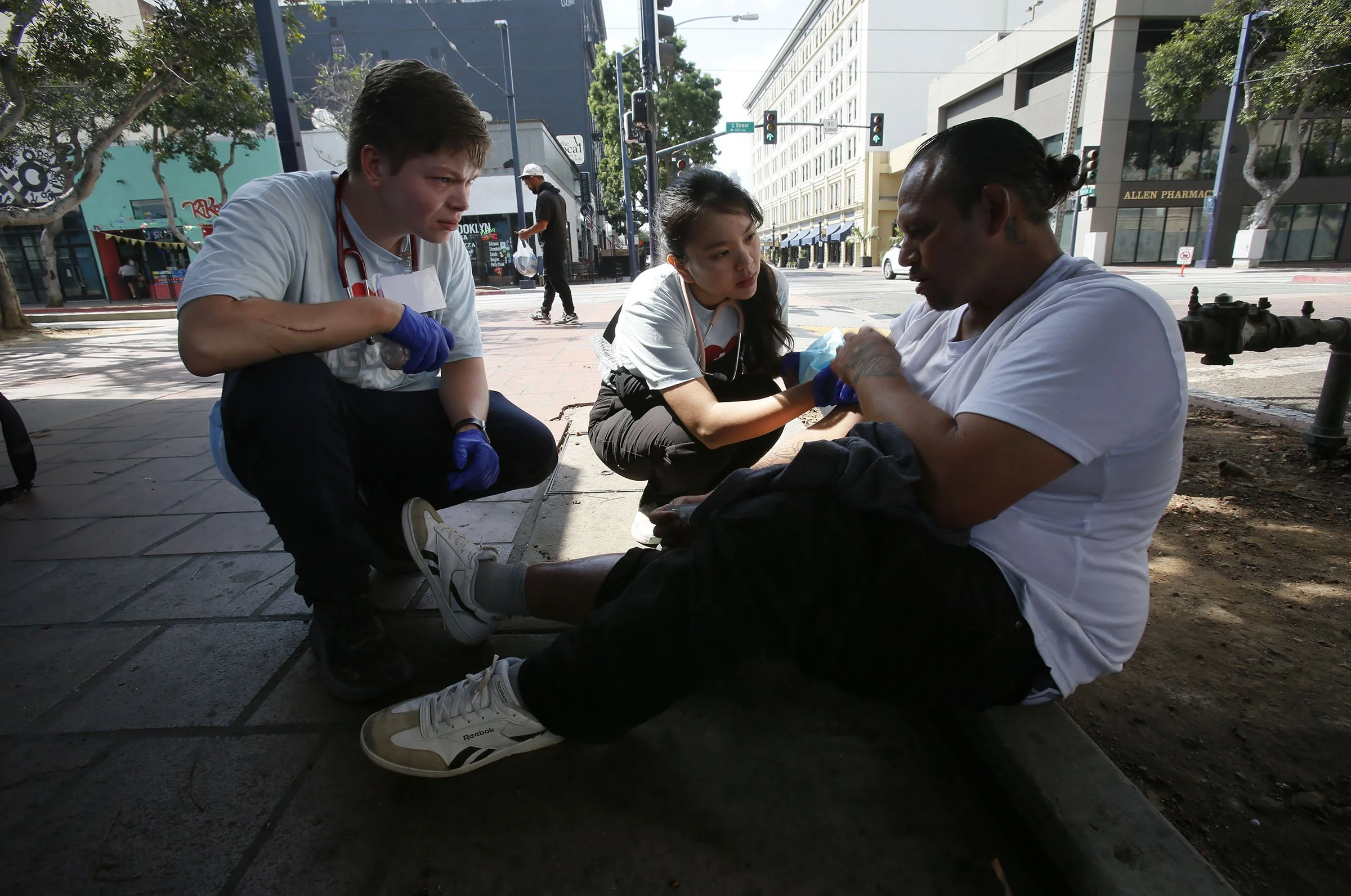
Turning the next two corners and following the trolley tracks, we landed in front of the only public 24-hour bathroom (the hours have since been reduced). Mona talked with a man who was leaning on a head-high mountain of belongings balancing on a shopping cart. The rest of the team kneeled next to his friend’s wheelchair while gently taking the shoe off her foot. Her other leg was amputated below the knee. Both legs were swollen and her pants, therefore her skin, had been wet for days due to recent rains and her not being able to change into dry clothes. Mona leaned in to apply a cream to her foot, while Sophia Scherschel, another volunteer, took off her own surgical glove to hold the woman’s hand during this process.
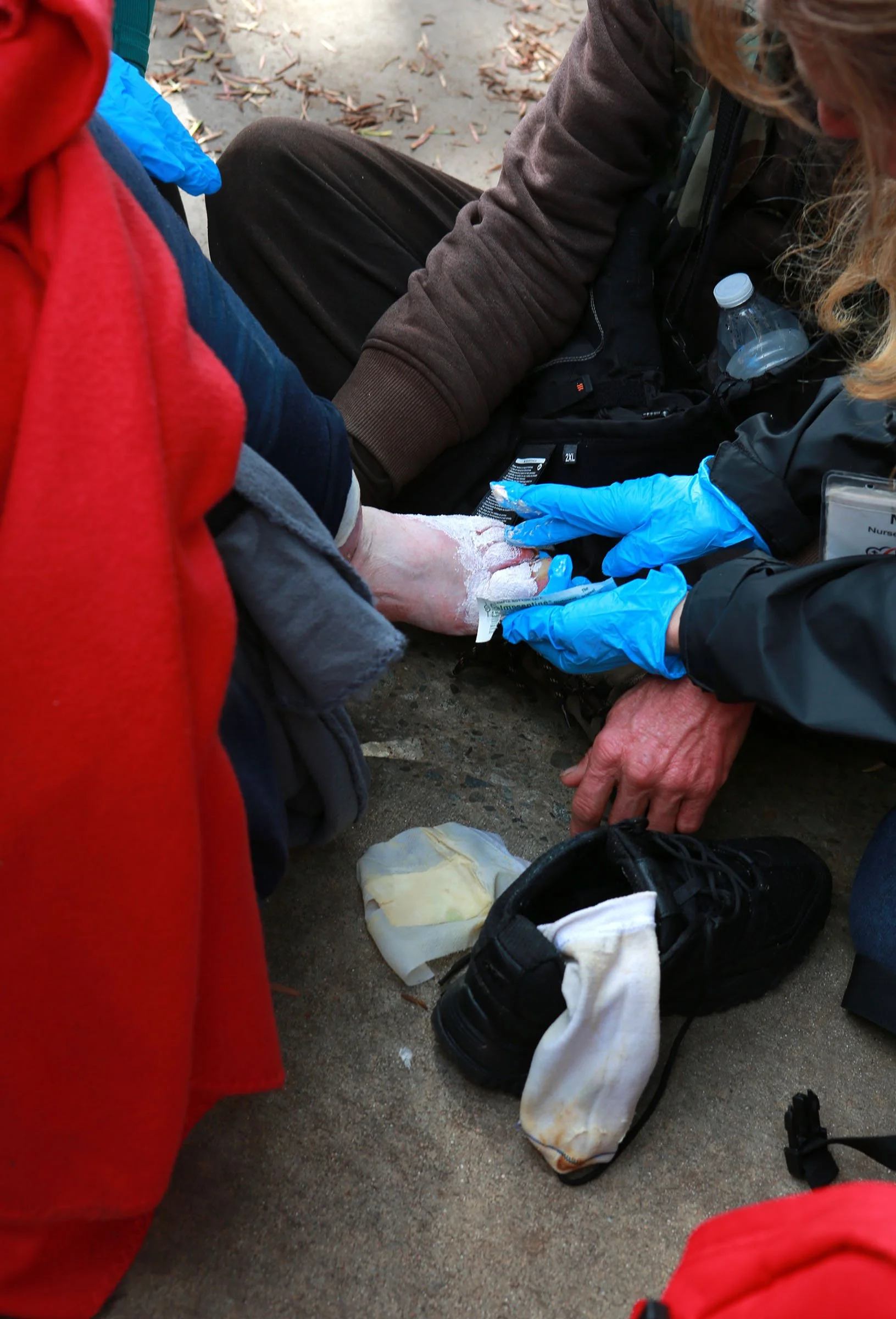
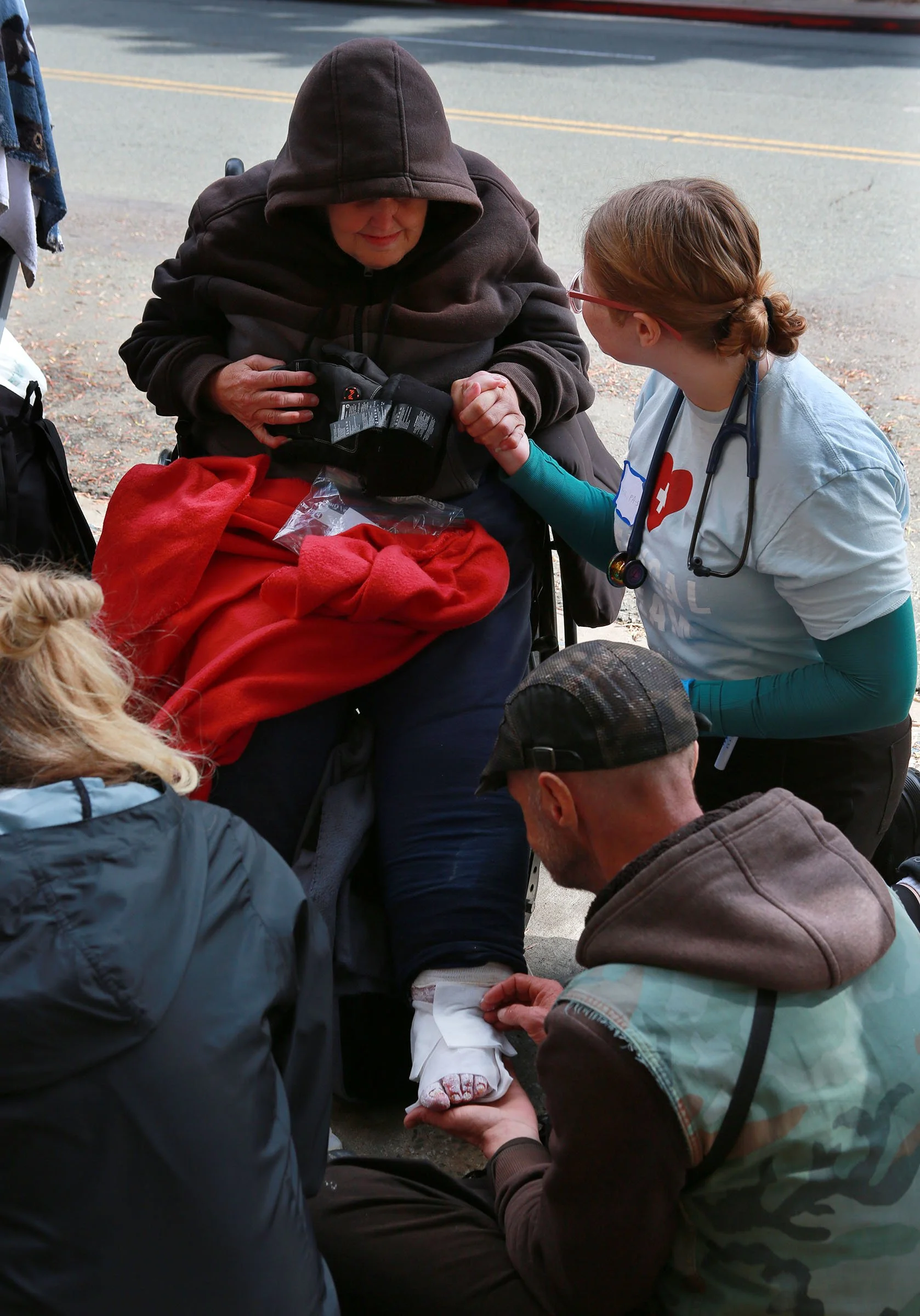
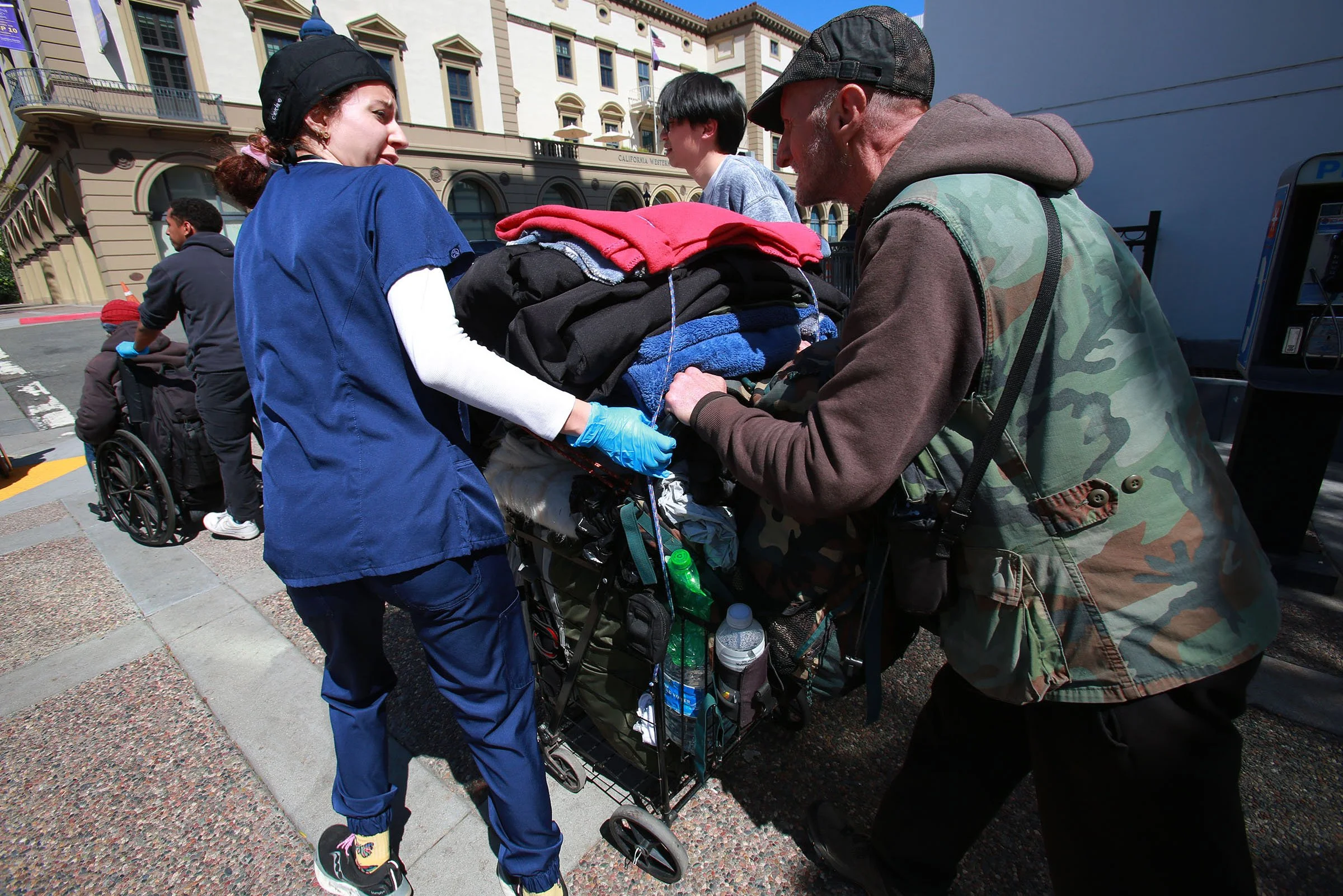
The next day, at Ladle, the SCC team decided to go looking for the couple, to make sure they got care. Thankfully, the couple was still in front of the trolley tracks near the bathroom. It took three people to push-pull the shopping cart, and another two people to push the wheelchair up the street to the FPC. Along the way, Aaron Spaulding, another member of the team and a retired U.S. Navy medic, recognized a regular Ladle patron inching his way towards the Sunday meal, and offered to push the man’s wheelchair. A small caravan of wheels and people was now slowly making its way towards the church. In the wound care room, while the rest of the team assessed the woman’s foot issue, Aaron entertained her by playing her favorite 80s music on his phone and comparing his top choices of Mixed Martial Arts fighters with hers: the art of medicine.
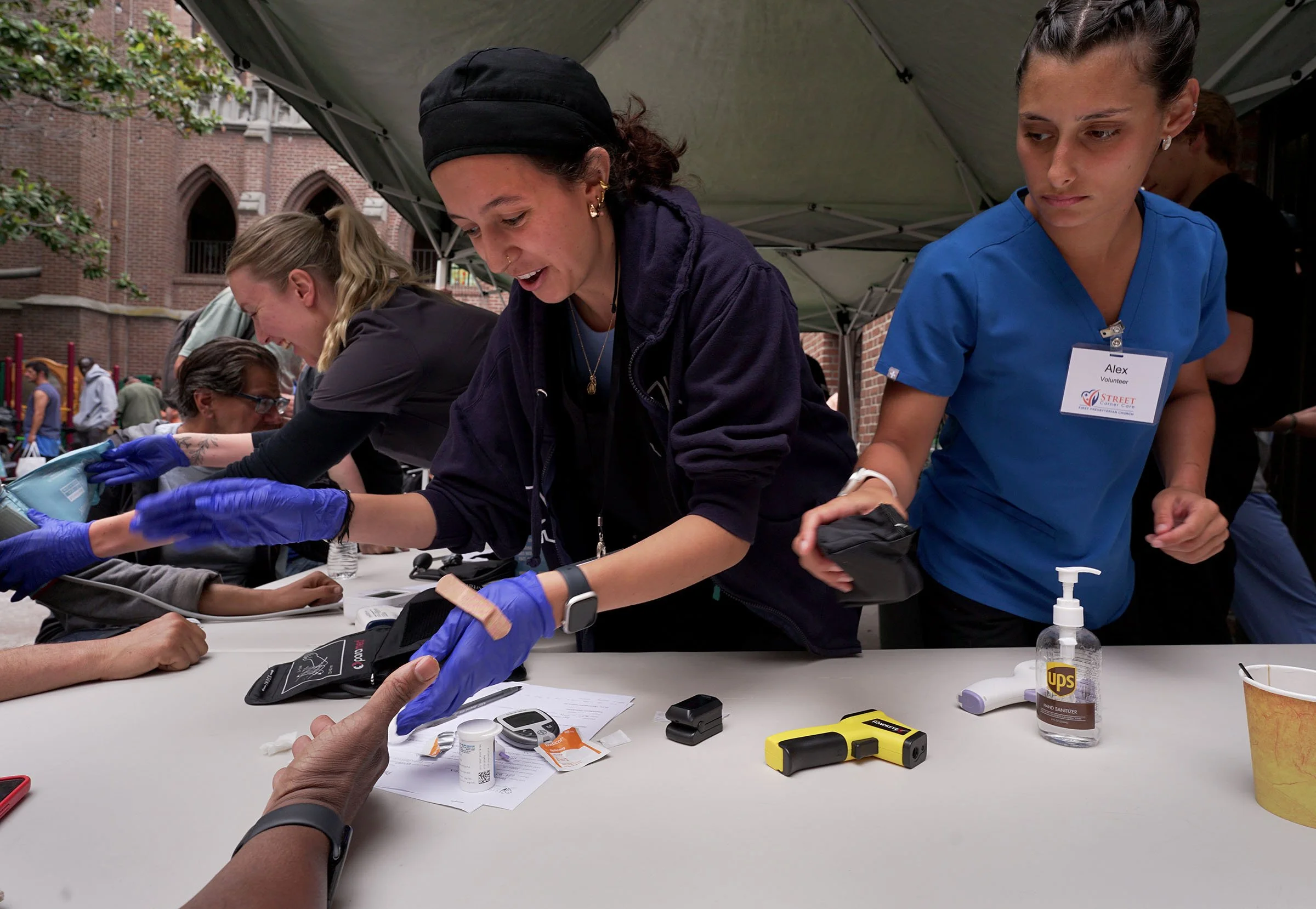
“The outreach is vital care and kindness, meeting people where they are. But being able to care for people at Ladle, where they have tables and more equipment, is like triage,” Mona said. Since the Ladle Fellowship is feeding between 300-350 people, if they can medically treat 10 percent of those guests, she said, it makes a difference. And in the process, “when we’re treating their feet, we’re also treating the heart,” she added, meaning showing them kindness.
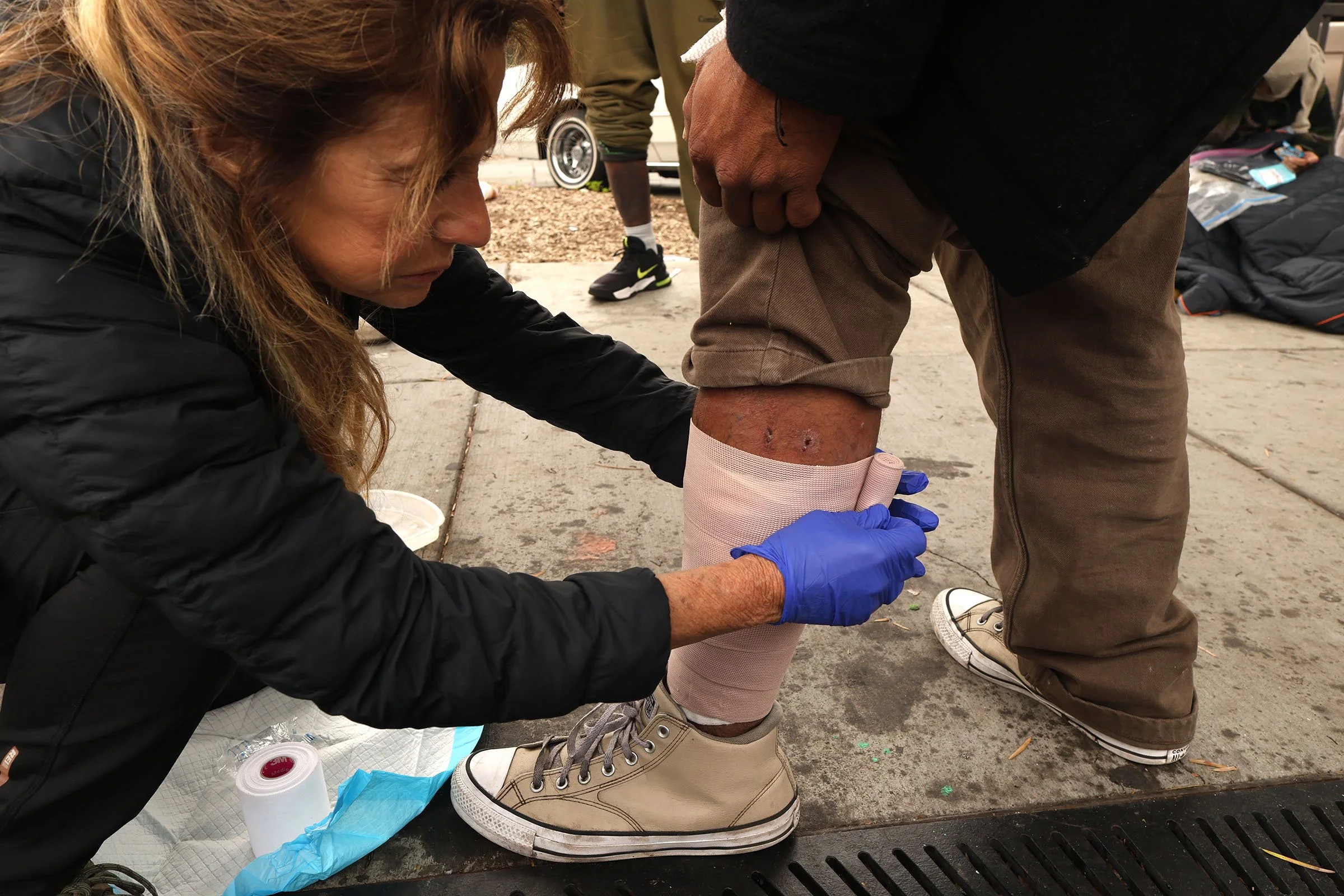
“Mona has figured out how to care for people with limited resources,” said Alice Kolodji, an SCC volunteer and primary care nurse practitioner with Kaiser. Alice has a background in creating mobile clinics and working in the field with clients in demanding environments like the NASSCO shipyards. There is tremendous value in seeing how people live, in order to better understand their health conditions, she said. At SCC, she has recently been seeing a lot of staff infections, venus and arterial wounds, and problems associated with poor circulation. Some problems are simple to care for, but she is also seeing more 30 year-olds with swollen legs and poor circulation - a side effect of fentanyl misuse, and something normally associated with elderly people suffering from diabetes and heart failure. Her ideal would be to have some form of partnership with local clinics in order to provide a bridge of care. When clients go to the emergency room for treatment, she said, “they are so bad about communicating why they need to be seen” that the hospital staff will often discharge them without treating them.
Currently, SCC operates on a budget of approximately $1,000 a month. All of that money goes to supplies, Kaleb said. He gave the example of a box of surgical gloves, which has 300 gloves per box, and costs $30. “We can easily go through five boxes in two weeks with wound care, foot care, different providers, etc. Other big expenses are ointments, NIX, a specialized shampoos for lice, is $20 a bottle, tylenol, med honey, and gauze.” The team makes it work - it’s a loaves and fishes thing. At the close of the most recent Saturday street outreach, as volunteers were putting away the red backpacks and carts, I asked Mona what makes SCC special. “Having the trust of people is key,” she said. “With Ladle, there’s an established system we can operate from, and that people can count on.”